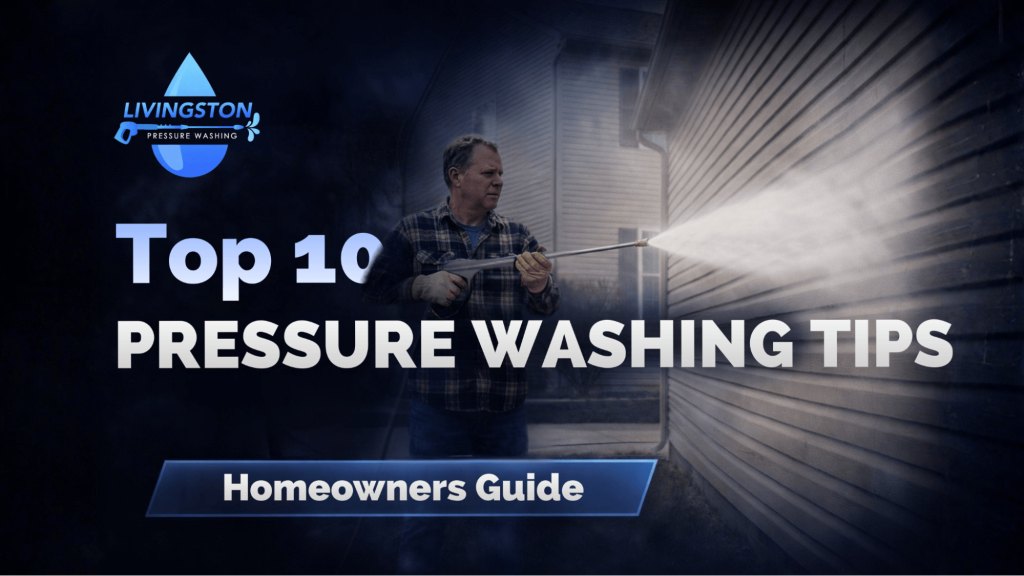
Top 10 Pressure Washing Tips | Homeowners Guide
Table of Contents
- Wear the Right Safety Gear
- Understand Your Pressure Washer
- Pick the Right Pressure and Nozzle
- Clear and Protect the Area
- Start at the Top and Work Down
- Keep a Safe Distance
- Test Before You Spray Everything
- Protect Kids, Pets, and Power Lines
- Use Detergent for Tough Jobs
- Know When to Call a Pro
- Frequently Asked Questions (FAQ)
- Get Free Estimate
Pressure washing is one of the fastest ways to make your home look fresh and cared for. It can blast away built-up dirt, mildew, and pollen from your siding, driveway, and patios — but the power that makes it effective also makes it risky if you don’t know what you’re doing. These top 10 pressure washing tips will help you stay safe, protect surfaces, and get better results whether you’re doing a DIY house wash or planning to call the pros.
1. Wear the Right Safety Gear
Before you start pressure washing, always gear up with the proper personal protective equipment (PPE). Pressure washers send water out at high force — even debris kicked up at low pressure can cause injuries if you aren’t protected.
Essential safety gear includes:
- Safety goggles or impact-rated glasses — to shield your eyes from flying debris and high-pressure spray.
- Durable gloves — for a solid grip and to protect hands from unexpected force or cleaning chemicals.
- Sturdy, closed-toe shoes or boots (preferably slip-resistant) — to protect feet and improve footing on wet surfaces.
- Long pants and long sleeves — to reduce skin exposure to debris and cleaning sprays.
- Optional hearing protection if using a loud, gas-powered washer.
Pressure washers can eject water and debris with surprising force — even low-pressure residential models can send stones or grit flying, making eye and skin protection essential.
Before you begin cleaning surfaces like siding or trim, make sure you understand what proper professional house washing looks like and why it matters for both safety and results.
2. Understand Your Pressure Washer
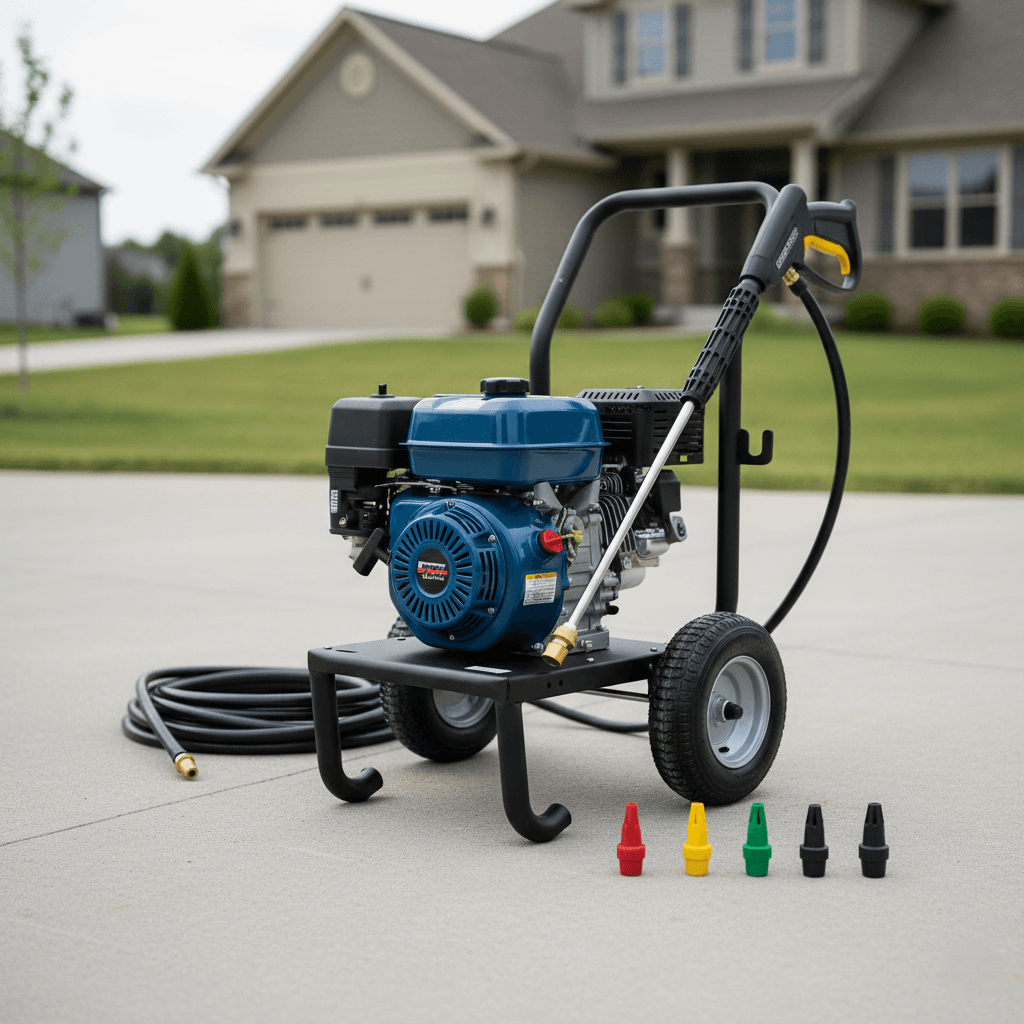
Different machines have different settings, nozzles, and power levels. Learn how your model works before you begin. It’s also good to know if your unit has adjustable PSI (pressure) so you don’t blast a fragile surface like wood or vinyl with too much force. Nozzles control the spray pattern and how much force the water hits the surface with, and picking the right one — like a 25° or 40° wide-angle tip — can make cleaning more effective while protecting the material. Wider tips are safer for softer surfaces, while narrower ones are better for stubborn dirt on concrete.
If you’re planning future cleaning tasks like deck or patio surfaces, it helps to understand your pressure washer’s capabilities first — especially before attempting a Deck and Patio Cleaning session with the right PSI and nozzle settings.
3. Pick the Right Pressure and Nozzle
Too much pressure can damage your home’s exterior. For most siding and wood, start with a lower pressure and a wide fan nozzle. Harder surfaces like concrete or sidewalks can take a higher setting, but you still want to be cautious—using too much PSI or the wrong spray pattern can etch or wear away the surface.
For concrete surfaces such as your driveway or sidewalk, a pressure washer in the 2,500–3,000 PSI range with a 25° or similar wide-angle nozzle is typically recommended to remove dirt and grime without causing surface damage.
Planning a deeper clean for your concrete surfaces? Check out our Driveways & Sidewalks cleaning service for professional results.
Always test on a small spot first to avoid mistakes and adjust your PSI and nozzle based on what you see.
4. Clear and Protect the Area
Move patio furniture, bikes, and other items out of the way. Cover plants, light fixtures, and electrical outlets with plastic sheets so they don’t get damaged by water or cleaning solution — anything that can be hit by spray or runoff should be protected before you start. Covering or shielding landscaping helps prevent pressure washer solutions from harming plants and shrubs, which are more vulnerable than hard surfaces like concrete or siding.
If you’re also preparing other exterior areas around your home, consider checking out professional Gutter Cleaning to protect your landscaping from water overflow and debris buildup, and Window Cleaning to keep your views crystal clear while the exterior gets refreshed.
5. Start at the Top and Work Down
Pressure washing from the top down helps dirty water rinse clean areas rather than re-soiling them. This gives you a smoother, more even clean, especially on vertical surfaces like siding, because the water and debris flow downward instead of streaking or collecting on already cleaned spots.
If you want a professional-grade home exterior clean that uses the right direction, pressure, and technique, check out our House Washing service — it’s designed to protect your siding while delivering a uniform, thorough result.
6. Keep a Safe Distance
Hold the spray wand about 12–18 inches from the surface as a general rule of thumb — too close and you risk etching or gouging the material, too far and the wash won’t be effective. Maintaining a consistent, safe distance helps you clean more evenly and protects surfaces from accidental damage. Experts also recommend keeping the nozzle at the proper distance before adjusting pressure or changing nozzles to find what works best for each surface.
If you want professional help getting the right pressure, angle, and distance — especially on vertical siding or delicate areas — check out our House Washing service. Professionals are trained to handle these techniques safely and effectively.
7. Test Before You Spray Everything
Pressure washers are powerful. Always test a small hidden area first before washing large sections — this helps you dial in the right settings and guard against damage or unintended results. Testing lets you adjust pressure, nozzle type, and cleaning solution without risking visible surfaces that matter most.
When the roof is part of the job — a surface that especially needs careful technique — consider professional help instead of DIY. Our Roof Cleaning service uses soft-wash methods and trained crews to safely remove algae, moss, and mildew without harming shingles.
8. Protect Kids, Pets, and Power Lines
Pressure washing is a powerful tool — and with that power comes real risk if it’s not handled responsibly. The spray from a pressure washer isn’t like a garden hose; it can injure skin, throw debris, and even penetrate flesh or eyes if someone gets hit directly by the stream. Because of this:
- Keep children and pets well clear of the work area. Never let children operate or play near a pressure washer — the force of the spray can cause serious wounds, and curious pets can wander into harm’s way.
- Avoid spraying people, animals, or yourself. Pointing the nozzle at anyone can result in painful and potentially dangerous injuries.
- Be mindful of electrical hazards. Water conducts electricity, so never spray near exposed power lines, outlets, meter boxes, or electrical panels. This helps prevent shock, short circuits, or worse.
- Watch for obstructions and trip hazards. Hoses, toys, garden tools, and uneven ground can all cause slips or falls if you or someone else accidentally walks into the work zone.
Many pressure washer safety guides strongly emphasize checking your surroundings before you begin and keeping bystanders at a safe distance while you work.
Why this matters: Even a quick burst of high-pressure water can behave like a cutting tool — it can injure people or pets and damage surface coatings, plants, or electrical components if used carelessly.
9. Use Detergent for Tough Jobs
For heavy grime, mildew, pollen, and oil stains, applying an eco-friendly cleaning detergent first can make a huge difference. Apply it with a low-pressure setting, let it sit briefly, then rinse from the top down for best results.
10. Know When to Call a Pro
DIY pressure washing works great for many typical tasks, but there are clear signs when hiring a professional is smarter — not just easier.
Professionals bring experience, training, and commercial-grade equipment that most homeowner machines and rentals can’t match. They know how to adjust pressure settings, choose the right cleaning solutions, and adapt techniques for specific surfaces so you don’t accidentally strip paint, crack wood, or damage delicate siding.
Here are key professional benefits that go beyond DIY:
- Faster and more thorough results — Pro crews can often complete a job in a few hours that might take DIYers a whole weekend, and they deliver a deeper clean with fewer passes and less risk of streaks or missed spots.
- Safer for people and property — Pros are trained to handle the hazards of high-pressure water, heights, ladders, and cleaning solutions, minimizing the risk of injury or accidental damage that can happen with DIY attempts.
- Specialized techniques and tools — Some stains, mold, mildew, or buildup respond best to professional-grade cleaners or soft-wash methods (which use lower pressure with detergent to protect surfaces). These tools and methods go beyond what most rental units can do.
- Long-term cost savings — While DIY may seem cheaper at first, mistakes like stripped siding, concrete etching, or accidental water intrusion can lead to repair costs that far outweigh the price of hiring a pro.
Professional pressure washing isn’t just about getting it done — it’s about getting it done safely, efficiently, and with high-quality results. Experienced technicians help protect your investment by preventing damage that could shorten the life of materials or lead to costly repairs down the road.
Frequently Asked Questions (FAQ)
- How often should I pressure wash my home?
Most surfaces only need pressure washing about once a year to stay clean and prevent mildew, pollen, or grime buildup — though shaded or high-traffic areas might need extra attention. - Is pressure washing safe for my home?
Yes — when done correctly. Pressure washing is safe for siding, driveways, decks, and other surfaces as long as you use the right pressure, nozzle, and technique. Too much pressure or the wrong settings can damage delicate materials. - What’s the difference between pressure washing and power washing?
Pressure washing uses high-pressure water at regular temperature. Power washing uses heated water, which can be more effective against grease or heavy stains. For most home jobs like siding, patios, and driveways, pressure washing is sufficient. - Can I pressure wash myself?
Yes, you can pressure wash yourself, especially for simple jobs, but pressure washers are powerful and can cause damage or injury if used improperly. Hiring a professional ensures safer and more thorough results. - Does pressure washing use a lot of water?
Contrary to what many people think, pressure washing doesn’t use as much water as a traditional garden hose over the same time period — and professionals aim to be efficient so you’re not wasting water. - Is it safe for kids and pets?
When the machine is running, keep children and pets away from the work area — high-pressure water can be dangerous if it hits skin. Once the surface is completely rinsed and dry, it’s safe for play again. - What surfaces can be pressure-washed?
Pressure washing is great for siding, driveways, patios, decks, fences, and walkways — just be sure to adjust the pressure and nozzle for different materials so you don’t cause damage.
Schedule Your Service
Get a free estimate in
Livingston MI,
Howell,
Brighton,
Fowlerville,
Hartland
& nearby areas!
Or, if you prefer to call, you can reach us at
810-360-1002.