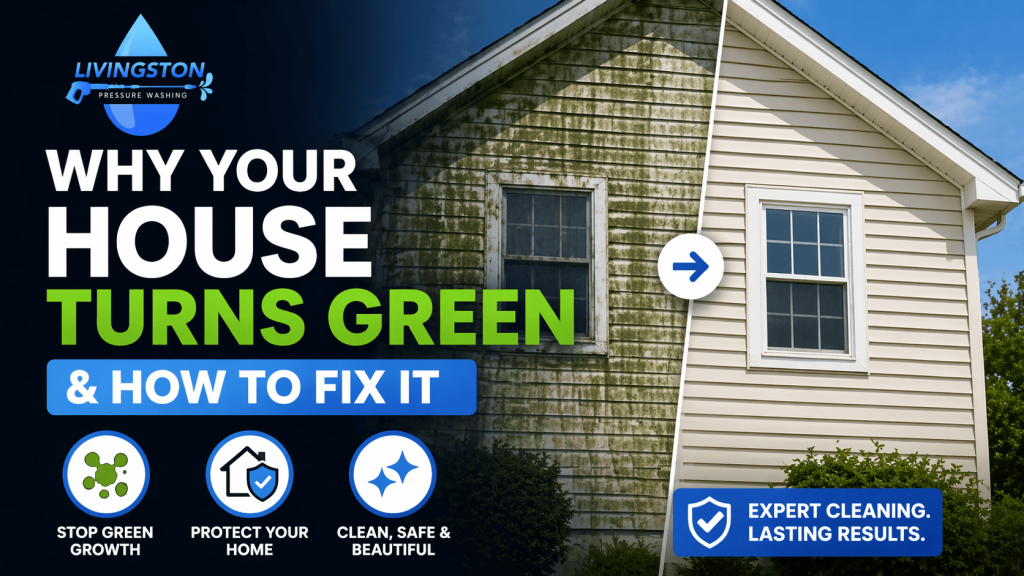
Learn why your house turns green from algae and how to safely remove it. Discover the best cleaning methods to protect your home and prevent regrowth.
Table of Contents
Understanding Green Algae on Your Siding
If your house is turning green, you’re most likely dealing with algae buildup on your siding. This happens when moisture, shade, and organic debris combine to create the perfect environment for growth—especially on north-facing walls that don’t get much sunlight.
What starts as a few faint green patches can quickly spread across your home’s exterior, making it look dirty and neglected. But more importantly, it can lead to long-term damage if ignored.
Why Your House Turns Green
Green buildup on your home isn’t random—it’s the result of specific environmental conditions working together.
1. Moisture & Humidity (The #1 Cause)
Algae thrives in damp environments. Rain, humidity, and trapped moisture on your siding create ideal conditions for growth.
In many cases, moisture comes from:
- Rainwater that doesn’t dry properly
- Condensation buildup
- Poor drainage around the home
2. Shade & North-Facing Walls
If one side of your home is greener than the others, it’s likely the north-facing side.
These areas:
- Receive less sunlight
- Stay damp longer
- Allow algae to grow faster
This is why many Michigan homeowners notice green streaks appearing first on shaded walls or under roof overhangs.
3. Dirt & Organic Debris
Algae doesn’t just need water—it needs food.
Dust, pollen, and organic debris collect on your siding and provide nutrients that help algae grow and spread.
4. Clogged or Damaged Gutters
Overflowing gutters can cause water to run down your siding, keeping it constantly wet.
This creates a perfect breeding ground for algae and mold.
That’s why services like Gutter Cleaning are critical for prevention.
5. Nearby Trees & Poor Airflow
Trees and bushes:
- Block sunlight
- Trap moisture
- Reduce airflow
This keeps your siding damp for longer periods, accelerating algae growth.
Why It’s Worse in Michigan
In areas like Livingston, Howell, Brighton, and surrounding Michigan communities, this problem is even more common.
Here’s why:
- Humid summers create ideal algae conditions
- Frequent rain keeps surfaces damp
- Tree-heavy neighborhoods increase shade and debris
These regional factors make algae buildup a recurring issue for many homeowners.
Is Green Algae on Your House a Problem?
Short answer: Yes—and it’s more than just cosmetic.
1. It Traps Moisture Against Your Home
Algae holds moisture on your siding, which can:
- Cause paint to deteriorate
- Lead to mold growth
- Damage exterior materials
2. It Spreads Quickly
Algae spreads through airborne spores that travel via wind and rain.
That means:
A small green patch today can cover your siding within a season.
3. It Can Cause Long-Term Damage
If left untreated, algae can:
- Stain siding permanently
- Contribute to wood rot
- Reduce your home’s lifespan
4. It Hurts Curb Appeal & Property Value
A green-stained home:
- Looks poorly maintained
- Can lower perceived value
- May even trigger HOA notices in some neighborhoods
How to Remove Green Algae from Your House
There are several ways to remove algae—but not all are equally effective or safe.
DIY Options
1. Vinegar Solution
- Mild and eco-friendly
- Works for light buildup
- Requires scrubbing
2. Bleach Solution
- Kills algae and mold
- Needs careful handling
- Can damage plants and surfaces
3. Pressure Washing
- Removes surface stains
- Fast for large areas
But here’s the problem:
Pressure washing alone often:
- Doesn’t kill algae at the root
- Can damage siding
- May force water behind panels
The Best Way to Clean Your House
The most effective solution is professional soft washing.
Instead of relying on pressure, this method uses:
- Specialized cleaning solutions
- Low-pressure application
- Algaecides that kill growth at the source
This approach:
- Eliminates algae spores (prevents regrowth)
- Protects siding and paint
- Provides longer-lasting results
This is the method used by Livingston Pressure Washing for House Washing.
Why Professional Cleaning Works Better
Professional services:
- Use commercial-grade equipment
- Adjust pressure based on surface type
- Apply treatments that last 1–3 years
They also handle multiple surfaces safely, including:
How to Prevent It from Coming Back
Once your home is clean, prevention is key.
1. Trim Trees & Bushes
Increase sunlight and airflow.
2. Clean Your Gutters
Prevent water from running down the siding.
3. Improve Drainage
Ensure water flows away from your home.
4. Schedule Regular Cleaning
Annual or bi-annual cleaning prevents buildup before it spreads.
When to Call a Professional
You should consider professional help when:
- Green stains keep coming back
- The affected area is large
- Your home has multiple stories
- You’re concerned about damaging siding
Hiring a professional ensures:
- Safer cleaning
- Better results
- Longer-lasting protection
FAQ — Green Algae on House
Why is my house turning green?
Because algae grows on damp, shaded surfaces with organic debris—especially on north-facing walls.
Is green algae harmful to my house?
Yes. It traps moisture, spreads quickly, and can damage siding over time.
Can I pressure wash algae off my house?
You can remove surface stains, but pressure washing alone won’t kill the algae, so it often comes back.
What kills algae permanently?
Professional soft washing treatments that eliminate algae at the root.
How often should I clean my house in Michigan?
Typically once every 1–2 years, depending on shade, moisture, and tree coverage.
So, If your house is turning green, it’s not just dirt—it’s algae caused by moisture, shade, and environmental buildup. Left untreated, it spreads quickly and can damage your home’s exterior.
While DIY methods can help temporarily, professional soft washing is the safest and most effective long-term solution.
Schedule Your Service
Or, if you prefer to call, you can reach us at 810-360-1002.