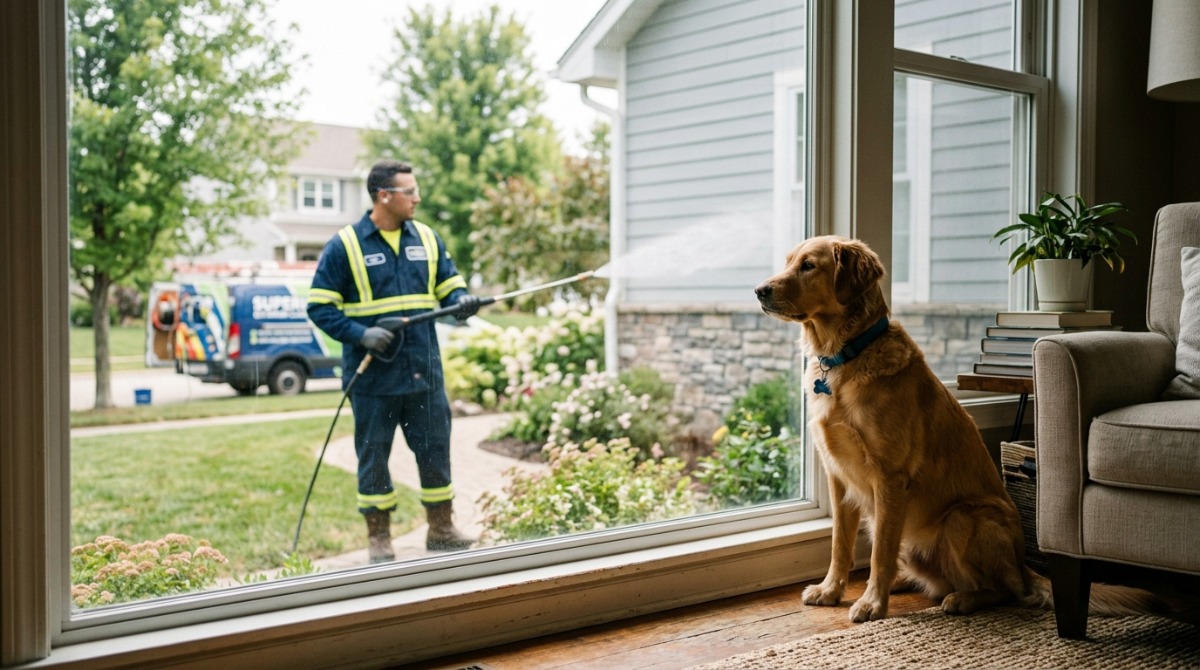
Yes, soft wash cleaning is considered low risk around pets and children when it is done correctly, but no cleaning product is risk free. Pets and children stay indoors during the job and stay off wet surfaces until they are dry.
Have a toddler, a dog or a coop in the yard? Tell us when you ask for a free estimate and we will plan around it.
What Does Livingston Pressure Washing Say About Chemicals?
We use custom, in house, environmentally friendly detergents and no hard chemicals that can harm pets or your family. That is the wording on our site, and we read it out loud to customers, then explain what it means and what it does not mean.
“Environmentally friendly” describes our approach to products and runoff. It does not mean harmless if swallowed or sprayed in the eyes. Low risk when done right is the honest way to say it. We would rather give you that plain line than a bold promise, because a bold promise is easy to say and hard to stand behind. You can read more about our house washing.
What Is Actually in a Soft Wash Solution?
Most soft wash mixes combine water, a cleaning agent that kills and loosens algae and mold, and a surfactant, which is a soap that helps the mix stick and rinse.
Across the industry, the cleaning agent in many professional mixes is sodium hypochlorite, the same compound that is in household bleach, used much more diluted. The Ontario Poison Centre notes that household bleach is usually below 10 percent sodium hypochlorite, and that it irritates the skin and eyes. See its page on bleach.
That describes what is common across the industry. It is not a statement of our own formula. The strength and the rinse matter as much as the name of the ingredient.
What Does a Surfactant Do?
A surfactant breaks surface tension so the solution spreads out and rinses off. It is why the siding looks foamy during a wash.
What Is Dwell Time and Why Does Rinsing Matter?
Dwell time is how long the solution sits on a surface to do its work. The rinse is the plain water that follows. Rinsing removes loose residue and leaves the surface ready to dry.
Crews also pre wet and rinse plants. Our site says we keep plants wet by constantly spraying water over the area while detergent is used.
Why Are Pool Chlorine, Drinking Water and House Wash Treated Differently?
They come from the same family of chemistry, but they have very different strengths and uses. We do not say a house wash mix is as safe as drinking water. Strength, exposure time and rinsing are what matter.
How Long Should Pets and Children Stay Away?
Pets and children stay indoors and away from the work areas during the job, and out of wet areas until the surfaces are dry. Our Terms and Conditions say this directly.
There is no single official re entry time for house washing. We looked, and we did not find one. Professionals commonly say to wait until surfaces are dry. That can be a short time on a warm day and longer when it is cool and humid. When in doubt, wait longer. For a related question, read how soon you can use your deck and patio afterward.
What About Pets That Go Out in the Yard?
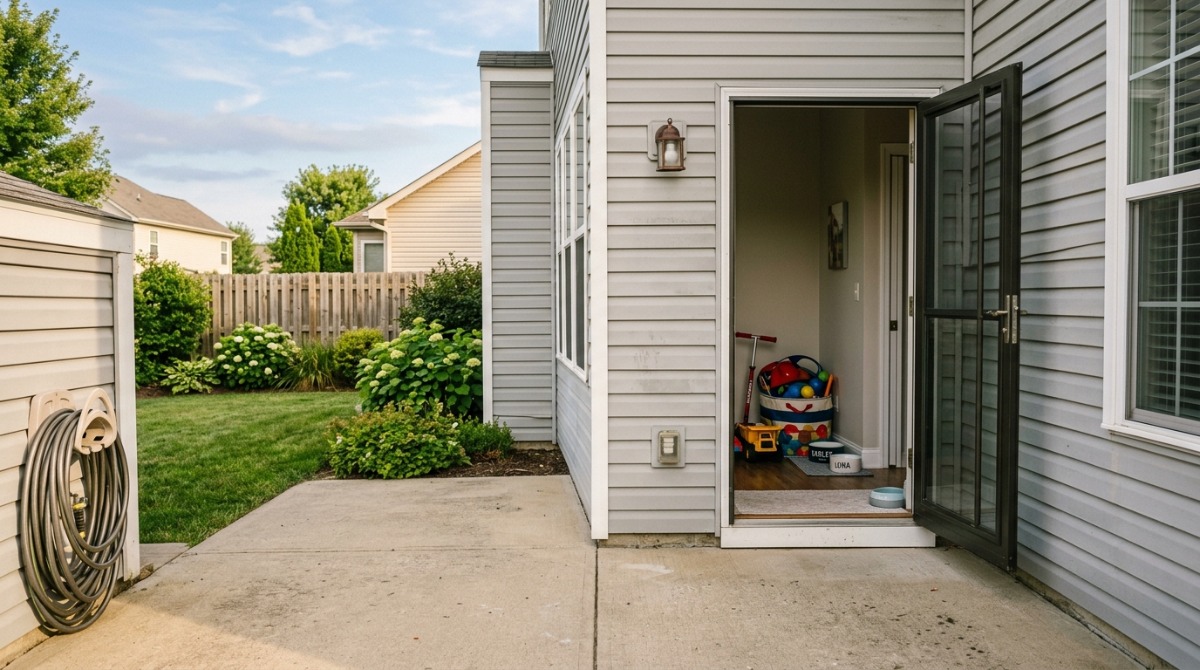
Keep gates closed, dogs indoors, and bowls and toys inside. Keep pets from drinking puddles or runoff.
We once arrived where a dog was out in the yard and a gate had been left open. Pets inside, gates closed and bowls brought in is the rule. If a pet licks a wet surface or drinks runoff, call your vet or an animal poison hotline.
What About Children Playing Outside?
Kids stay indoors during the job, and off wet decks, patios and lawns afterward. Bring toys, balls and play equipment inside before we arrive. We have shown up where toys, a ball and a small pool were left on the patio.
Slippery surfaces matter too. Wet siding, steps and patios are slippery, and that is a separate risk.
What Should You Do If Someone Has Skin or Eye Contact?
Stay calm. Rinse skin with plenty of water. For the eyes, rinse with lukewarm water for at least 15 minutes, as the Ontario Poison Centre advises. Then call poison control or a doctor.
Never mix cleaning products. The Ontario Poison Centre warns that mixing bleach with acids produces chlorine gas, and mixing it with ammonia products produces chloramine gas. This is general safety advice and not a medical guide.
Is It Safe for Plants, Gardens, Ponds and Chickens?
Plants are protected by covering when necessary and by keeping them wet while detergent is used. Our terms also ask you to deep soak plant beds, trees, shrubs and turf at soil level for 15 to 30 minutes per zone, every other day, for 7 days around your service date. Please tell us about sensitive plants beforehand. Read more in our post on pressure vs soft washing.
What About a Vegetable Garden?
Tell us where it is. Cover or move containers, and we rinse well. Wash produce as you normally would. We make no claims about harvest timing.
What About a Pond or Fish?
Runoff can harm aquatic life if it is uncontrolled. Sky SWC, a soft wash company, says preventing chemical runoff into water sources is crucial because it can harm aquatic life. You can read its page on soft wash chemicals.
Tell us before the job. This is a general precaution. We cover or divert, and we spray away from the water.
What About Backyard Chickens and Other Animals?
Keep birds and animals penned or away, and bring in feeders and waterers. This is general precaution. We once worked on a rural lot with a coop near the house, and the owner told us in advance. Please mention coops and animals in the estimate form.
What About Asthma, Allergies and Sensitive Noses?
If someone in your home has asthma or a chemical sensitivity, tell us before the job. We keep windows and doors closed on the day.
The EPA’s page on mold and health says mold can trigger allergic reactions and asthma, and can irritate the eyes, skin, nose, throat and lungs of both mold allergic and non allergic people. So green and black growth on a house is not harmless either, and removing it has a health side, while the cleaning products need care.
We are not doctors, so talk with your doctor. If your family member is sensitive to smells, you can also ask us which day and time of day works best, so the windows stay closed and the household has a plan. Sensitive family members may prefer to spend the job time away from home.
Is Mold on the Siding Worse Than a Brief House Wash?
It depends on the person and the amount of growth. We do not want to take a side too hard. Humid Michigan summers and shaded north sides grow algae and mold fast. One customer had a family member with allergies who was bothered by the green growth on the north side. You can read why a house turns green.
How Do You Read a Safety Data Sheet and What Should You Ask Any Contractor?
A Safety Data Sheet, or SDS, is a standard document that lists a product’s ingredients, hazards, first aid steps and safe handling. Professionals train on these. The Power Washers of North America (PWNA) offers chemical safety training that covers SDS interpretation, protective equipment, safe mixing and dilution, emergency response and the OSHA Hazard Communication Standard.
Here are questions to ask any contractor, including us:
- What product do you use?
- What is in it?
- Can I see the SDS?
- How do you protect plants and runoff?
- What do you need from my family?
- Where do pets and children need to be?
- Are you insured?
For more help, read how to choose the right pressure washing service for your home.
What Happens on the Day of Your House Wash at LPW?
Before we start, we walk the property and check for pets, children, toys, plants and anything you told us about. Then we close windows and doors and confirm that items are moved and pets and children are indoors.
We cover and wet the plants, apply the detergent at low pressure, let it dwell, and rinse. Then we take a final walk around before the family comes out.
If you are home, you can watch from inside and ask us anything. If you are away, a note on the door tells us what to watch for, such as a gate that sticks, a bowl left out, or a bed with new plants.
You do not need to be home, though it is preferred. Weather can also move the date, and we may reschedule for rain, high winds or freezing temperatures.
Use this list on wash day, and tell us about anyone with asthma or allergies. Use the quote form on our contact page. Our Howell exterior washing page covers the area we serve.
Real World Example: A Family With a Toddler, a Dog and a Garden
Picture a family with a small child, a dog and a vegetable bed. Here is the plan. Toys and bowls come inside. The dog is indoors, the garden is covered and wet, and the windows are closed. Everyone waits until the surfaces are dry before going out.
The rule we teach is simple. When in doubt, keep everyone off the wet area a bit longer.
A few minutes of waiting costs nothing, and it gives the sun and air time to dry the patio, the steps and the lawn edge. Walk the area yourself before you let anyone out. If the surface looks wet or feels slick, give it more time. Then bring the dog out on a leash first, so you can see how things are.
Frequently Asked Questions
Is soft washing safe for pets?
It is low risk when pets are kept indoors and off wet surfaces until they are dry. It is not zero risk.
How long should I keep my dog inside after a house wash?
Until surfaces are dry, and longer when it is cool and humid. There is no official fixed time.
Is bleach used in house washing?
Many professional soft wash mixes use sodium hypochlorite, diluted. That is how the industry works in general. It is not a statement about our own formula.
Is it safe for children to be home during a house wash?
They can be home, indoors with windows and doors closed, away from work areas.
Will it hurt my garden or plants?
We cover plants when needed and keep them wet. Please follow the soak guidance in our terms and tell us about sensitive plants.
Can the runoff hurt my pond or chickens?
It can if it is uncontrolled. Tell us in advance, and keep animals away from the work area.
What if my child has asthma?
Tell us before the job, keep windows closed, and consider being away. Talk to your doctor too.
What does environmentally friendly mean?
It describes our approach to products and runoff. It does not mean harmless if swallowed.
Can I see the products and Safety Data Sheets?
Ask any contractor. An SDS is a standard document that lists ingredients, hazards and first aid steps. It is a fair question to ask us as well.
What should I do if my pet licks a wet surface?
Rinse the area, remove the pet, and call your vet or a poison hotline.
Conclusion: Plain Answers, Careful Work
The honest answer is low risk when done right, not zero risk. Your household has three jobs: pets and children inside, windows closed, and wait until it is dry.
Want a careful house wash in Howell, Brighton, Hartland or anywhere in Livingston County? Call Livingston Pressure Washing at 810 360 1002 or use the quote form on our contact page for a free estimate. There is no pressure to book. New customers get a discount when they mention First Time Offer. Mention pets, children, ponds and health needs with your request.