Yes, it can, and most damage comes from technique and equipment choices rather than from the cleaning itself. If you live in Howell or anywhere in Livingston County, and you are asking whether pressure washing can damage vinyl siding, you are asking the right question.
One homeowner we heard about rented a pressure washer on a Saturday and watched the siding come clean. A few weeks later, they noticed a musty smell near the base of a wall. That is how hidden water damage tends to show up, quietly and late. This guide covers how damage happens, what safe cleaning looks like, how soft washing differs, and what red flags to watch for. At Livingston Pressure Washing, we clean vinyl with low pressure soft washing.
Can Pressure Washing Damage Vinyl Siding? The Short Answer
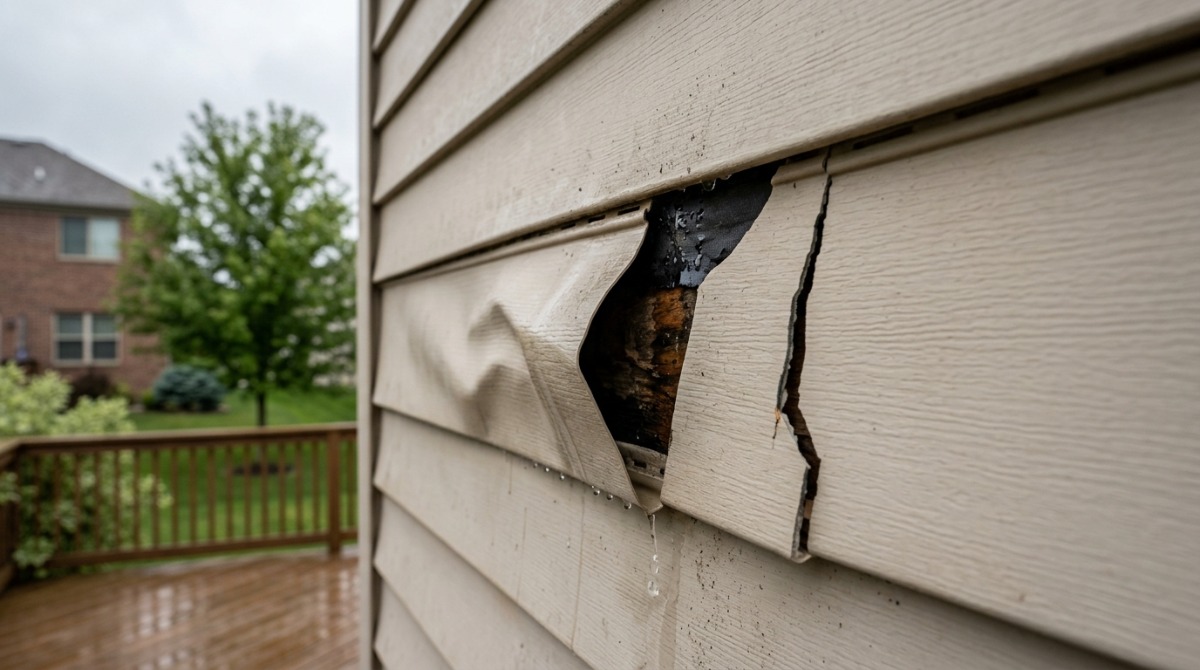
Yes, pressure washing can damage vinyl siding. Too much pressure, a nozzle held too close, or spray aimed upward can crack panels, loosen seams and force water behind the siding, where it causes mold and rot. Soft washing with low pressure and the right detergent cleans vinyl without those risks.
Worried about your siding? Get a free estimate and a quick look at your siding before we ever turn on a hose.
How Does Pressure Washing Damage Vinyl Siding?
Damage usually happens in one of five ways. Knowing them helps you judge any method, whether you rent a machine or hire a company.
Can High Pressure Crack or Warp Vinyl Panels?
Yes, especially on old or brittle panels and at seams. Vinyl is a plastic, and a hard stream can crack it, warp it or loosen it from the wall. The worst case is a zero degree tip, which puts all the force into a very small spot. Cold weather can make vinyl less forgiving as well, since vinyl is generally more brittle when it is cold. That is a general point, not a rule for any one product.
Can Spraying Upward Push Water Behind the Siding?
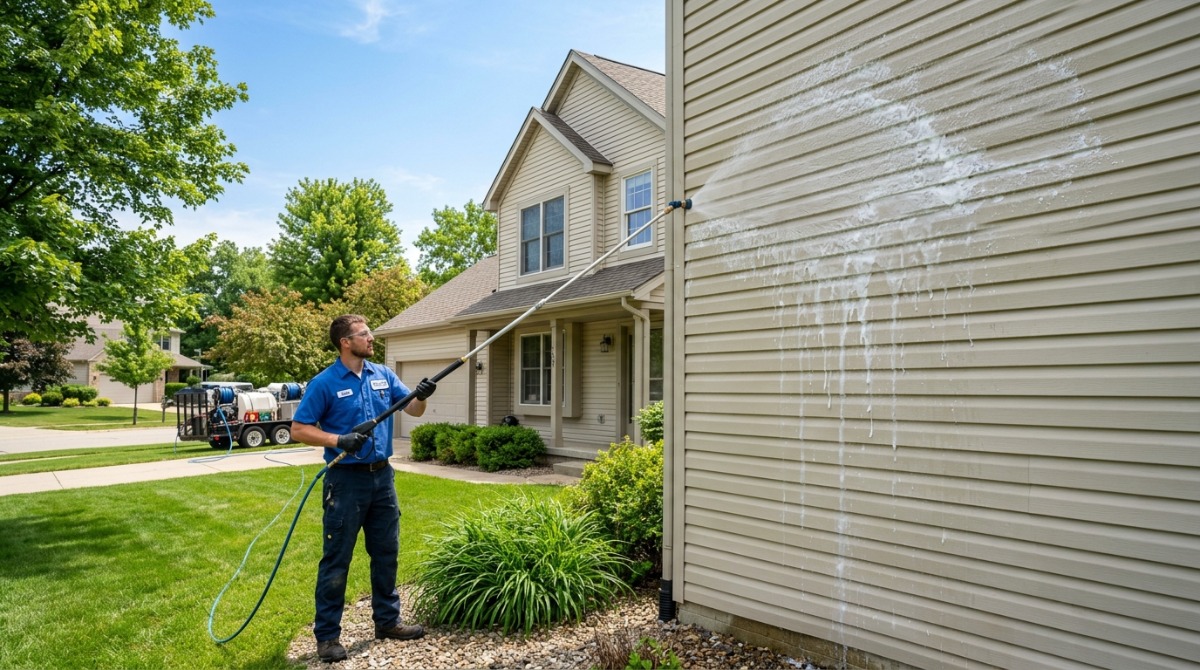
Yes, and this is the main risk. Vinyl panels overlap like shingles. Spray aimed downward sheds off, the way rain does. Spray aimed upward goes under the laps and behind the panel.
The Polymeric Exterior Products Association (PEPA), which the Vinyl Siding Institute is now part of, says on its vinyl siding cleaning and maintenance page not to aim the stream upward, because it can force water behind the siding panels. Once water is behind the panels, it has nowhere easy to go.
Does Standing Too Close Cause Damage?
Yes. Close range puts more force on a small area, and that can gouge, warp or loosen a panel. We will not give you a fixed distance as a rule. Distance and tip size both matter, and the advice you find online does not agree. Some pages quote one range, and others quote another. Treat any single number with care.
Does Old, Oxidized or Sun Faded Vinyl Break Easier?
Often, yes. Older vinyl can feel chalky when you rub it. That chalk is oxidation, and the panel may also be more brittle than it was when new. Michigan sun and freeze and thaw cycles age vinyl over the years. On older siding, a gentler method is the safer choice.
What About Loose Panels, Gaps and Mold Behind Siding?
Cracked, loose or gapped areas let water in. Hidden moisture can feed mold and rot in the sheathing behind the siding. Watch the trouble spots around windows, door trim, vents and light fixtures. Panels also have small drainage slots along the bottom edge. They are there to let moisture out, not to let spray in. If you can see a gap, a crack or a loose section, the wall behind it is the part to worry about.
What Do Vinyl Siding Makers and the Industry Say?
We want to be accurate here, so we stay with what we could verify.
What Does the Vinyl Siding Institute (Now PEPA) Say About Cleaning?
The Vinyl Siding Institute is now part of PEPA. On its cleaning and maintenance page, PEPA says routine cleaning often needs only a garden hose rinse, and that mild soap and water with a soft cloth or soft bristled brush works for a deeper clean. It says a power washer can be used with caution. It tells people not to aim the stream upward, and to take care around windows, doors, wiring and plumbing. It also notes that some manufacturers set their own limits on pressure and cleaners, and it lists undiluted chlorine bleach among the products to avoid.
Why Should You Check Your Own Siding Maker’s Instructions?
Siding makers differ on pressure and on cleaners. We cannot tell you what your brand allows, and we do not claim any specific brand rule. Look for your siding’s care guide or warranty, and read what it says. If it is unclear, ask the maker before anyone cleans the wall.
Soft Washing vs Pressure Washing: What Is the Difference for Vinyl?
Soft washing uses low pressure and detergent to loosen algae and grime, while pressure washing uses force. For siding, that difference matters a lot. If you want more on the two methods, read our post on pressure vs soft washing.
What Is Soft Washing?
Soft washing is low pressure water combined with specialized cleaning solutions. On a Michigan house, what sits on vinyl is usually algae, mildew, pollen and road grime. A soft wash is designed to lift that growth without scrubbing or blasting. We use custom, in house, environmentally friendly detergents.
Why Does Soft Washing Suit Vinyl?
The chemistry and the dwell time do the work, and then a gentle rinse carries the growth away. That avoids the force that damages panels. Our house washing FAQ says our soft washing technique is safe for all types of siding, including vinyl, brick, stucco and wood. That is our public claim about the method. It is not a promise of zero risk, and it does not cover damage that was already there.
When Is Pressure Still Used on a Home?
Correct pressure for each surface still has a place on hard surfaces, such as a concrete driveway. It is not the main tool on siding. Our driveway and sidewalk cleaning is a different job from a house wash, and we treat it that way.
Can Soft Washing Remove Every Stain?
No, and we would rather say so. Rust, oxidation, deep organic stains and similar marks may not fully come out. Our Terms and Conditions state that we do not guarantee complete removal of oxidation or deep organic stains. We would rather set expectations before the job than after it.
What Does Safe Vinyl Siding Cleaning Look Like?
A careful job has a few things in common: a look at the siding first, a low pressure method, protection for plants and sensitive spots, and a gentle rinse from top to bottom.
What Should Happen Before Any Water Touches the Siding?
- A walk around for cracked or loose panels
- A check of caulk and old window seals
- Windows and doors closed
- Sensitive spots covered, such as outlets and light fixtures
- A note of any delicate surfaces
On one job, the walk around showed a few cracked panels and a loose section near a corner. We pointed them out to the customer first. That is why we look before we wash.
How Should the Wash Go?
The order is simple. Wet the plants, apply the detergent, let it dwell, then rinse from top to bottom with a gentle flow. Keep the stream angled down. The goal is to let the detergent do the cleaning, not the force.
How Should Plants and Landscaping Be Protected?
We cover sensitive areas during cleaning. We also keep plants wet by spraying water over them while the detergent is on the siding. Some plants need extra care, so tell us about any new plantings or favorites before we start.
What Should Homeowners Do to Help?
A little prep makes the day go smoothly. Our Terms and House Washing FAQ ask for the following:
- Close all windows and doors.
- Remove items near the house.
- Keep pets indoors.
- Tell us about any well or low pressure water issues.
- Remove window screens if you want them cleaned.
How Can You Tell If a Company Is Risky for Your Siding?
A good company can explain its method in plain words. If you get vague answers, take that as information.
What Are the Red Flags?
- No proof of insurance
- Will not look at the siding first
- Brags about a bigger machine
- Uses a narrow or zero degree tip on siding
- Cannot explain how they protect windows and plants
- No written estimate
- No local reviews
One customer called us after another company told them, “We just crank it up.” That is the kind of answer that should make you pause.
What Questions Should You Ask Before Hiring?
- What pressure and method do you use on vinyl?
- Are you insured?
- How do you handle cracked panels you find?
- What happens if something is damaged?
- Can you show recent work nearby?
For more help, read how to choose the right pressure washing service for your home.
Not sure if your siding is safe to wash? Send us a photo through the quote form on our contact page. We will tell you what we see. New customers get a discount when they mention First Time Offer.
Should You Pressure Wash Your Own Vinyl Siding?
It is possible, but it is riskier than most people think. We do not look down on anyone for trying. We just want you to know what can go wrong.
What Are the Main DIY Mistakes?
- Using the wrong tip
- Standing too close
- Aiming upward
- Working on a ladder with a wand that recoils
- Spraying near windows
- Letting soap dry on the wall
- Using undiluted bleach
When Is a Hose and Soft Brush Enough?
For a light, dusty film, a hose and mild soap may be all you need. PEPA’s guidance points the same way, with a garden hose rinse for routine cleaning and mild soap and water with a soft brush for more. Work gently, and rinse well.
When Is It Better to Call a Pro?
Call a pro for second story walls, heavy algae, chalky siding, a mix of materials, or a history of leaks. Our post on pressure washer rental vs hiring a pro walks through that choice.
What Happens During a Soft Wash Job at LPW?
Here is the order we follow.
Before We Arrive
We ask you to close windows and doors, move items away from the house, and keep pets inside. We also need clear access to your water spigot and your outlets.
On the Day
We walk around the house and point out any damage we see. We cover sensitive areas, soak the plants, and apply the detergent. A shaded north wall with green algae is a good example. The growth came off with detergent and a low pressure rinse. The chemistry did the work. Then we check windows and trim, and finish with a walkthrough if you are home.
After the Wash
Siding may look streaky when wet and brighter once it dries. Algae can return over time, depending on shade and moisture. That is normal for Michigan, where the north side of a house tends to stay damp.
What Should You Do If You Think Water Got Behind Your Siding?
Stop washing, and look for signs. These can include:
- A musty smell
- A soft or stained interior wall near the exterior
- Bubbling paint inside
- Damp insulation
- Warped panels
Dry the area if you can. Then call a licensed contractor to inspect the wall. We do not blame anyone here. We just want the wall checked before a small problem grows.
Practical Examples: Three Vinyl Siding Situations
Green Algae on a North Wall
Soft washing fits well here. Shade and moisture make the north side grow algae first in Michigan. A detergent and a low pressure rinse are usually enough.
Chalky Old Siding on a Wooded Lot
On an older home with chalky siding, the goal was gentle cleaning, not a showroom look. We set expectations first, and cleaned gently.
Cracked Panels Found Before the Wash
We point them out first, and we avoid forcing water into them. The customer decides on repairs. Our terms say we are not liable for pre existing damage, which is another reason we look before we start.
Frequently Asked Questions About Pressure Washing Vinyl Siding
Is it safe to pressure wash vinyl siding?
It can be done with care, but it carries risk. Too much pressure, a close nozzle or upward spray can crack panels or push water behind them. Check your siding maker’s instructions, or use a gentler method.
What PSI is safe for vinyl siding?
Guidance varies, and the pages we reviewed do not agree. Makers may set their own limits, so check your brand’s care guide. We do not publish a safe number as a promise.
Can a pressure washer crack vinyl siding?
Yes, especially on old or brittle panels and at close range. Cold weather can make vinyl less forgiving too.
What is the best way to clean vinyl siding?
Soft washing is a good choice, or a garden hose with mild soap and a soft brush for light dirt. Keep the water angled down, and rinse well.
How often should vinyl siding be washed?
Our site recommends at least once a year. In Michigan’s humid spring and summer, algae grows quickly on exteriors.
Does soft washing damage vinyl siding?
Our house washing FAQ says our soft washing technique is safe for vinyl siding, because it uses low pressure and the right detergent. It is not a guarantee against damage that was already there, so we look at your siding first.
Will cleaning remove oxidation or fading?
It may not. Our Terms and Conditions state that we do not guarantee complete removal of oxidation or deep organic stains. We will tell you what to expect before we start.
Does bleach hurt vinyl siding?
PEPA lists undiluted chlorine bleach among the products to avoid on vinyl siding. Dilution and method matter, so check your maker’s instructions first.
Can pressure washing void my siding warranty?
It depends on the maker and the terms. Read your warranty, or ask the manufacturer before anyone cleans the siding.
Get Your Vinyl Siding Cleaned the Careful Way
Yes, pressure washing can damage vinyl siding. That is why we use low pressure soft washing, and why we look at your siding before we begin.
Call Livingston Pressure Washing at 810 360 1002 or use the quote form on our contact page for a free estimate. New customers get a discount by mentioning First Time Offer. We serve homeowners across Livingston County. See the areas we serve.