A homeowner called us and asked if we could clean a stamped patio, and whether the color would survive. It is the first thing every stamped concrete owner asks.
Will cleaning remove the colour from my stamped concrete? Not when it is done gently. But certain methods can, and some of what looks like faded color is really something else. This guide explains what stamped concrete is made of, what actually strips color, what normal cleaning lifts, and how sealer fits in for Michigan drives and patios in Howell and across Livingston County.
Will Cleaning Remove the Colour From My Stamped Concrete? The Direct Answer
Careful cleaning should not remove the color from stamped concrete. High pressure that cuts into the surface, acid, harsh degreasers, or stripping a failing sealer can. Dirt, algae and a worn sealer film often make color look faded, and cleaning can bring it back.
Not sure what kind of color your concrete has? Send us a photo with your estimate request and we will take a look.
What Is Stamped Concrete Actually Made Of?
Stamped concrete is regular concrete that has been colored and pressed with a pattern while it was still soft, then usually sealed. There are four layers to think about: the slab, the color, a release agent that stops the stamp from sticking, and the sealer on top.
How deep the color goes depends on how it was applied. We once stood at the edge of a driveway where the pattern in the joints was darker than the flat parts. There can be more than one color layer, and they wear differently.
What Is the Difference Between Integral Color, Color Hardener and Stain?
Integral color is mixed through the concrete. Color hardener is spread on the top layer and worked in. Stain is applied to the surface.
Euclid Chemical explains these methods in its article on coloring concrete. Integral color runs throughout the slab, so as the surface wears you keep seeing the color. Color hardener is broadcast over the surface after placement and gives a denser top. Acid stains use metallic salts and become a permanent part of the surface. Dyes use pigments that are not UV safe and fade in sunlight, which is why they are used indoors.
We do not give depths or percentages, because they vary by job.
What Is a Release Agent and Why Does It Matter?
A release agent is a powder or liquid used so the stamps do not stick to the concrete. On many jobs it also adds a second shade in the low spots. Leftover release agent can cause sealer problems, which is one reason sealing is a specialist step.
What Does the Sealer Do for Color?
Sealer protects against water, deicing salts and staining, and it can make color look richer. Concrete Network notes that sealers help prevent color fading from UV exposure. A worn sealer is often why color looks flat.
So Will Cleaning Remove the Color?
No. Normal careful cleaning removes dirt and growth, not the color itself. The color is part of the concrete or fixed into its surface, so a gentle wash does not lift it. The risk comes from the method.
The next two sections split things into two groups: what removes color, and what cleaning removes.
What Actually Strips or Fades the Color?
The things that remove color are the ones that cut or dissolve the surface.
- High pressure, or a narrow tip held close. In a trade forum thread, one professional washer described cleaning an integral color job at 2,800 PSI with a surface cleaner. It looked good until it dried, and then most of the color came out. That is one person’s account and not a standard.
- Acid washes. Muriatic acid opens the pores and can change the color.
- Harsh degreasers or strong chemicals.
- Stripping a failing sealer with strong methods.
- Staying too long in one spot.
Guidance on pressure varies from source to source, and what suits one job does not suit another. That is exactly why we start gentle, test a small spot and let it dry before we judge. Concrete Network, in its guide to cleaning and maintaining stamped concrete, says not to set the pressure too high.
What Does Normal Cleaning Remove?
Normal cleaning removes dirt, algae, mildew, moss, tire marks, and the grime that makes color look dull. It can also lift efflorescence on the surface, which is the white salt deposit left when moisture moves through concrete. And it can lift a hazy or flaking sealer film.
This is why a cleaned surface often looks more colorful. On a shaded north side walkway with green and black growth, the color underneath was fine. Most of the faded look was growth and grime.
Our Terms and Conditions say there is no guarantee on complete removal of rust, efflorescence, artillery fungus, oil, deep organic stains or oxidation. You can read about our driveway and sidewalk cleaning.
Why Does My Stamped Concrete Look Faded Even If I Never Cleaned It?
Sealer wear, UV, foot and car traffic, salt and shovels, and dirt trapped in the texture all play a part.
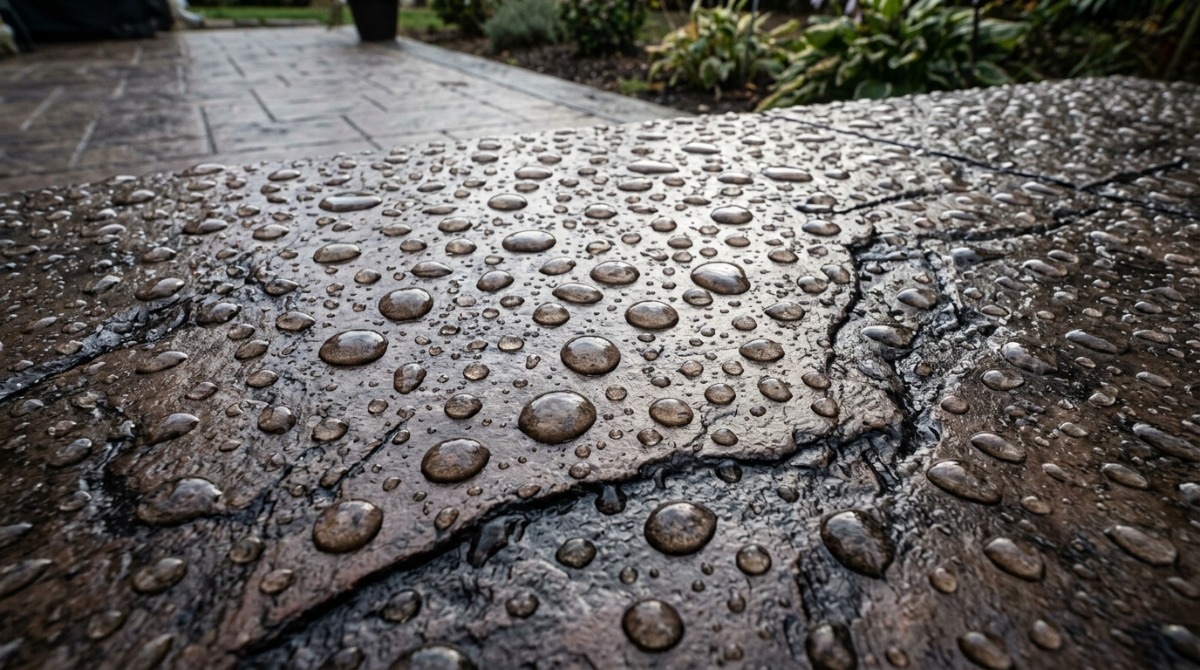
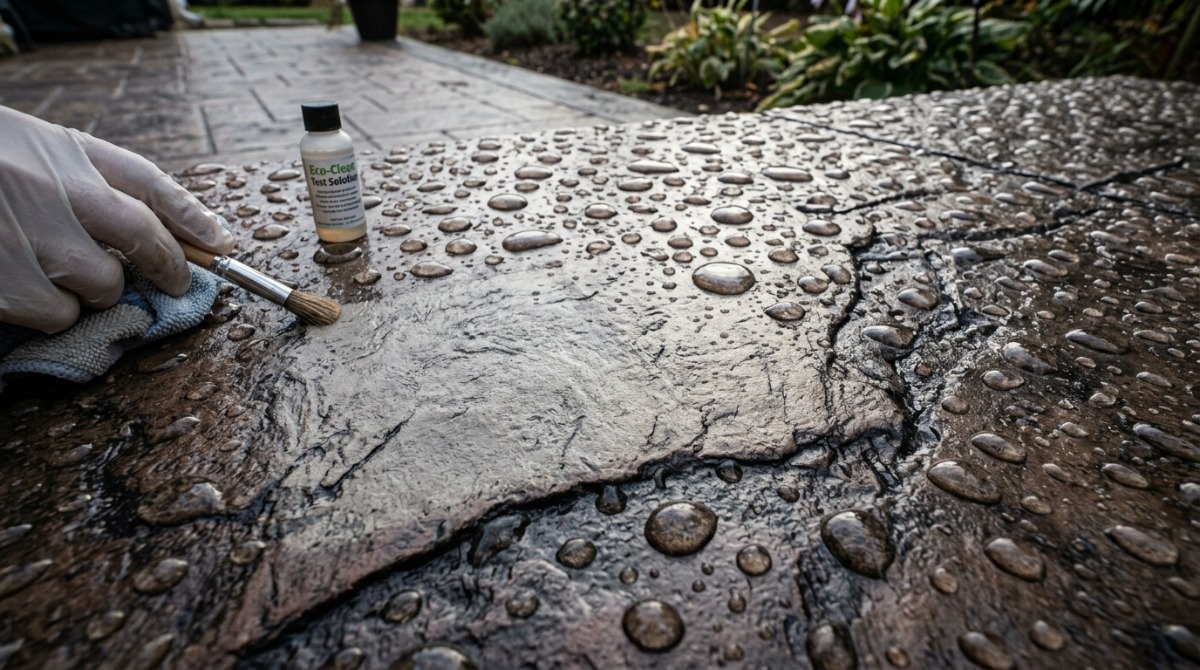
Try the water bead test. Cemstone’s exterior concrete maintenance guide says that when water no longer beads on the surface of the concrete, it is time to reseal. If water beads, the sealer is still working. If it soaks in, it is worn.
How Do We Clean Stamped Concrete Without Hurting the Color?
We start gentle and increase only if the surface needs it. We apply our careful concrete cleaning approach to stamped surfaces, and we do not claim to be stamped concrete experts.
Here is the approach in general terms:
- We look at the surface and ask about the color and the last sealing.
- We pick a spot out of sight.
- We use the detergent first and let it work.
- We use the right pressure for that surface.
- We keep the tip moving and at a distance.
- We rinse, let it dry and look again.
Our site says we use custom, in house, environmentally friendly detergents, and that we choose the right pressure for each surface. Our terms ask you to tell us about delicate surfaces beforehand. If you want a gentle cleaning on your driveway, walkway or patio, tell us what you know about the surface and any delicate areas, and use the quote form on our contact page.
Why Do We Test a Small Spot First and Wait for It to Dry?
Wet concrete always looks richer. You only know what you have after it dries. A surface can look fine wet and lighter once dry, so we test a small spot first and judge it dry.
The test spot goes somewhere out of sight, such as an edge near a garage wall or the back corner of a patio. We clean it, rinse it, and then wait. Only when it is fully dry do we look at the color and decide how to go on with the rest of the surface.
Should I Use Bleach or Acid to Clean It Myself?
Be careful. Some online pages suggest bleach mixes, and others warn against strong bleach and muriatic acid, so sources disagree. Strong products can change color or hurt the sealer.
Test first, rinse well, and never mix products. For light cleaning, mild soap and a soft broom are a good start.
When Does Stamped Concrete Need to Be Resealed?
Most trade guidance says every 2 to 3 years, sooner in harsher climates, and sooner still when the water bead test fails. Concrete Network says to reseal every 2 to 3 years depending on weather.
Sealing is not something we currently list as a service. For sealing, we recommend the original installer or a decorative concrete specialist. We clean before that step.
What Does Cleaning Have to Do With Resealing?
Sealer needs a clean, fully dry surface to bond. Cemstone says the concrete should be allowed to dry a minimum of 72 hours after power washing before any sealer goes on. Other sources say 24 to 48 hours. Sources differ, so follow the sealer maker’s instructions. A cleaning is a good time to check the sealer and plan the next step.
Can an Old Sealer Be Cleaned Instead of Stripped?
Light cleaning can lift dirt from a sealer. But flaking or cloudy sealer may need to be removed by a sealing specialist. We do not promise results.
What Does Michigan Weather and Salt Do to Stamped Concrete?
Michigan winters are hard on all concrete, because water soaks in, freezes and expands, over and over.
Cemstone explains that freeze thaw damage needs saturated concrete plus repeated freezing and thawing. Deicers lower the freezing point of water, which can add freeze thaw cycles. Cemstone advises avoiding deicers in the first winter, and says never to use ammonium sulfate or ammonium nitrate, which can break concrete down. Concrete Network also says to avoid deicing salts on stamped surfaces.
Use sand or traction grit instead, and a plastic shovel. Shaded, wooded lots in Livingston County also grow algae faster.
Why Do Spring Driveways in Livingston County Look Worn?
Salt, scraping, standing meltwater and shade all take a toll. We visited one spring where the edge near the garage was rough and pale after winter salt and shoveling. A cleaning can remove the grime, but it cannot rebuild a worn surface.
What Happens on the Day of Your Concrete Cleaning at LPW?
The crew arrives, looks at the surface with you and starts with a small test spot. We walk the surface and touch it to feel for loose sealer.
We ask you to move vehicles and items off the surface, and to give us access to water and power. We protect plants and keep them wet. Then we apply the detergent, rinse gently, and take a final look once the surface is dry.
Weather can move the date. Rain, wind and freezing temperatures are the usual causes. After service, our Howell exterior washing page covers the area we serve, and you can see our work in the gallery.
Real World Example: A Stamped Patio With a Worn Sealer
Picture a stamped patio with a flat, patchy look. There is green growth in the shade, and the sealer no longer beads water.
Cleaning removes the growth and grime, and the color shows better. It does not restore the sealer shine. The homeowner then decides what to do next, and that is a conversation with a sealing specialist.
One customer asked if we could just seal it. We told them what we tell everyone. We clean, and the original installer or a sealing specialist handles the sealing. That keeps each job in the right hands, and it keeps your color safe.
Frequently Asked Questions
Can you pressure wash stamped concrete?
Yes, with care. Use lower pressure and distance, test a small spot, and let it dry before you judge.
Will pressure washing fade stamped concrete?
It can if the pressure is high or the tip is close. Gentle methods should not.
What is the best way to clean stamped concrete?
Use detergent, a soft brush or broom, and a gentle rinse. For light cleaning, mild soap works well.
How often should stamped concrete be sealed?
Often every 2 to 3 years, depending on weather. The water bead test tells you when.
Do I have to reseal after cleaning?
Not always. Check the water bead test and the sealer condition. A sealing specialist can advise.
Why does my stamped concrete look blotchy?
Often it is worn sealer, dirt in the texture or uneven wear. It is not always the color.
What causes white haze on stamped concrete?
Efflorescence, or moisture trapped under the sealer. Our terms say we do not guarantee full removal of efflorescence.
Is bleach safe on stamped concrete?
Sources disagree. Strong mixes can affect color or sealer. Test first and rinse well.
Can road salt damage stamped concrete?
Yes. Salt adds freeze thaw cycles. Avoid it and use sand instead.
Do you clean stamped concrete in Howell and Livingston County?
Yes, we clean driveways and sidewalks across the county. Send photos with your estimate request so we can plan a gentle approach. We do not offer sealing.
Conclusion: Clean Gently, Then Decide About Sealer
Careful cleaning removes grime, not color. The things to avoid are high pressure, acid, harsh degreasers and aggressive stripping. After a cleaning, check the sealer.
Ready for a careful driveway or sidewalk cleaning in Howell, Brighton, Hartland or anywhere in Livingston County? Call Livingston Pressure Washing at 810 360 1002 or use the quote form on our contact page for a free estimate. There is no pressure to book. New customers get a discount when they mention First Time Offer.