Will soft washing kill my plants? It is the question we hear in almost every first call, usually in the last minute. One first time customer phoned the day before her job and mentioned, almost as an afterthought, that she had just planted hydrangeas in the spring. That is exactly what we want to hear.
This guide gives you a straight answer, shows what we do on the day, and explains what you can do in the week around your service. The honest answer is that it should not, and here is why, but we cannot promise zero risk.
Will Soft Washing Kill My Plants? The Short Answer
Soft washing should not kill your plants when the crew pre wets them, keeps fresh water running over them, shields delicate ones and rinses well. The risk drops a lot but never reaches zero, so we also ask you to soak your beds before and after and tell us about sensitive plants.
Worried about a bed you just planted? Tell us when you call and we will plan around it. Ask for a free estimate at 810 360 1002.
What Is in a Soft Wash Mix and Why Does It Matter for Plants?
A soft wash mix is mostly water, plus a cleaner and a surfactant that helps it cling to siding. Our detergents are custom and made in house. In the wider industry, soft wash mixes are commonly built on sodium hypochlorite, so we treat any cleaning solution as something that can harm plants if it is handled carelessly.
What Does Sodium Hypochlorite Do to Algae and to Leaves?
Sodium hypochlorite is an oxidizer. It breaks down algae and mildew on siding, and it can also burn plant tissue if it is concentrated. The signs on a leaf are whitening or brown edges.
Ask Extension, a service staffed by horticulture experts, puts it plainly in an answer about bleach and landscape plants: chlorine bleach can be harmful to landscape plants. The same answer says that wetting the foliage first helps dilute the solution, and that the solution should be rinsed off right away so it does not dry on the plants.
How Strong Is the Mix That Touches the House?
Pros generally aim for the weakest strength that works. The plants also do not see the mix straight from the tank. What reaches a leaf has already been diluted by water running down the wall and by the water already on the leaves.
Sources disagree about how weak is weak enough, and we are not going to quote a number for our own mix. The honest takeaway is that the mix is weak and diluted at the surface, and that the steps below are what keep it that way.
Why Do We Use Soft Washing Instead of High Pressure?
Low pressure protects siding. It also means less spray bounce and less bruising of leaves. If you want the full comparison, read our post on pressure vs soft washing.
How Do We Protect Your Plants During a House Wash?
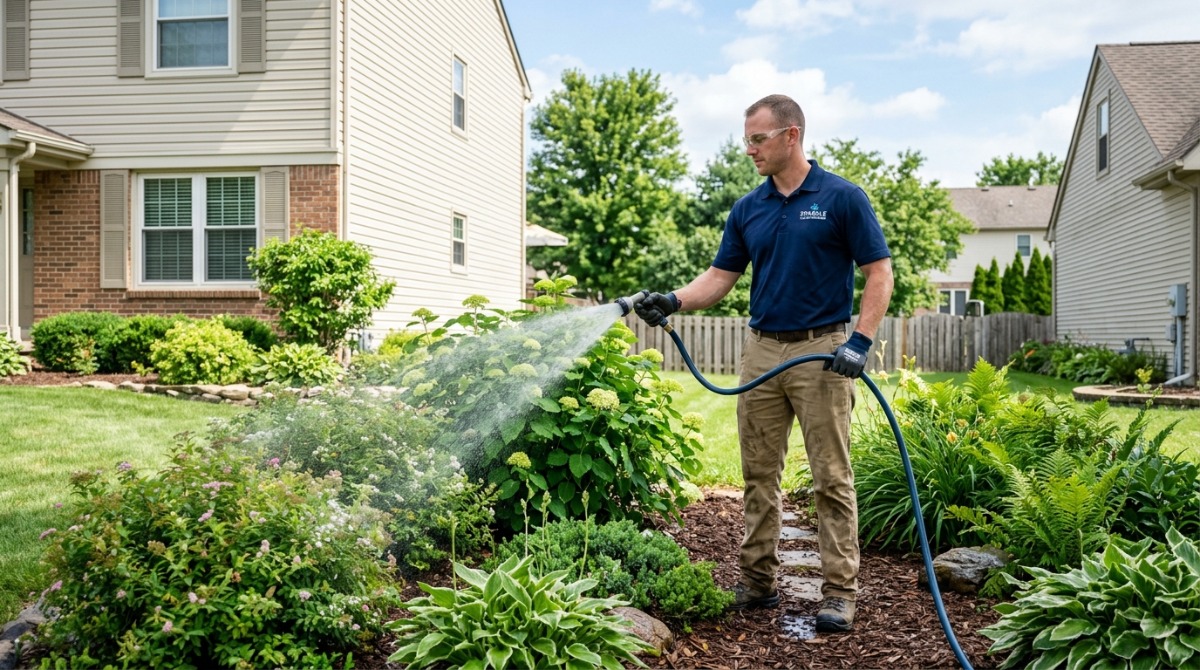
We protect plants by getting them wet first, keeping them wet, and rinsing them last. This is the core of the whole job.
Why Do We Wet Your Plants Before We Start?
Hydrated leaves and wet soil take in less of the mix, and any drops that land are diluted right away. Our site says we spray water over the areas where the cleaning solution is applied. Your own soaking before the visit gives the plants a head start.
PureSeal Services, a supplier, calls pre wetting the single most effective way to protect plants from damage. We cite it as a supplier explainer, not as a regulator. PowerWash.com, a trade site, gives the same advice in its guide on protecting plants and shrubs when soft washing.
Why Do We Keep Spraying Water Over the Beds While We Work?
This is our stated practice. We keep plants wet by constantly spraying water over the area while the detergent is in use. On a shaded north side of a house, with hostas growing tight to the foundation, the crew wets the bed first and keeps a hose running over it. Then they work the siding from the top down, so the rinse runs away from the plants.
Sometimes one hose handles the wall and another keeps the bed wet, depending on the layout. The water on the leaves is the protection. This is a description of our method, not a promise.
When Do We Cover Plants, and When Does Covering Make Things Worse?
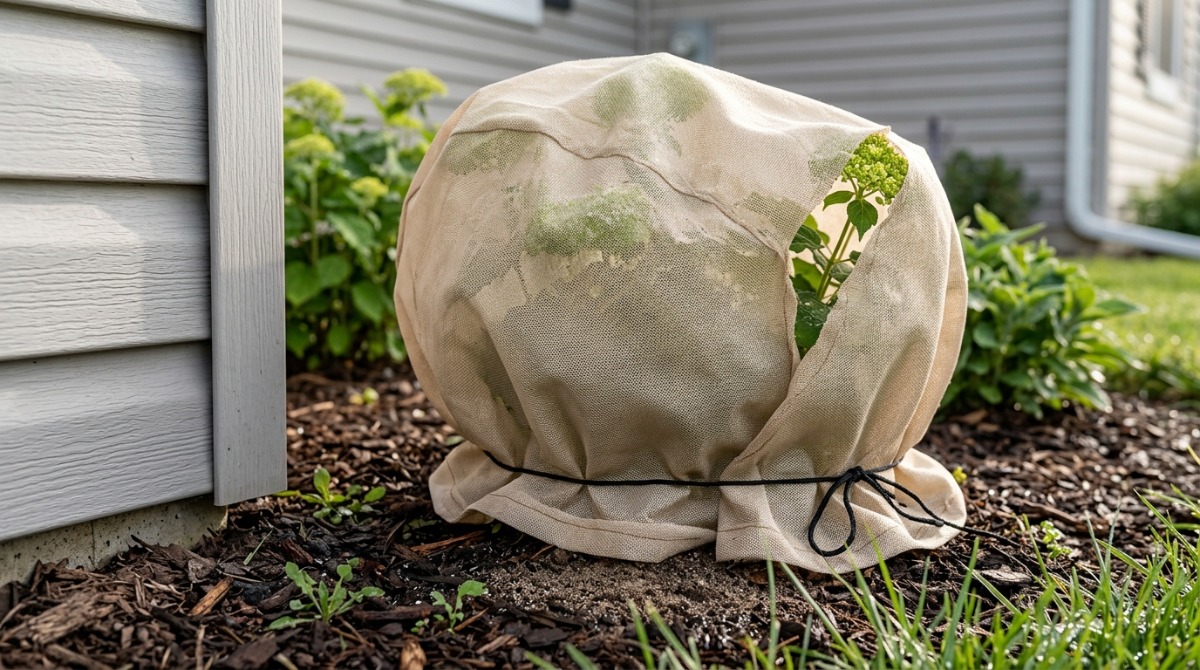
We cover sensitive plants when necessary. We use a tarp or a breathable cover, depending on the plant. We do not leave plastic on in strong sun. Both Ask Extension and PowerWash.com warn that plastic over plants in direct sun can magnify sunlight and trap heat, which can burn leaves.
On a day when the sun is strong and the shrub is small, we think twice about plastic. Covering is a tool with a downside, so we decide plant by plant, and we keep fresh water moving around the cover.
How Do We Rinse Plants at the End?
A final rinse of the plants and the ground near the wall washes away anything that dried on a leaf. This is the step that is easiest to skip, and it is the one that matters most.
Which Plants Are the Most Sensitive?
Not all plants react the same way, so we sort them into groups. This is general gardening guidance plus what we see on jobs. It is not a lab result.
Which Plants Do We Watch Most Closely?
- New plantings from this season, including shrubs, perennials and sod that have not rooted deep
- Annual flowers, tender perennials such as impatiens and petunias, and vegetables
- Hostas and ferns, which have thin, soft leaves and sit in shade where water dries slowly
- Lawn edges along the foundation, where runoff pools
- Evergreens already stressed by road salt, winter burn or drought
Which Plants Usually Handle It Better?
Established shrubs and trees with thick, waxy leaves and deep roots usually handle it better. The groups are a guide, and any plant that is already stressed moves up a group.
What Should I Tell You Before the Visit?
- Anything planted this year
- Anything in pots or hanging baskets, which we ask you to move away from the house
- Anything already struggling
- Any plant you simply love
What Should I Do in the Week Around My Service?
Soak the soil at the base of your plants, not the leaves. A few simple steps make a real difference.
What Does Our Soaking Request Mean in Plain Words?
Our Terms and Conditions ask you to deep soak plant beds, trees, shrubs and turf at soil level. Soak each zone for 15 to 30 minutes, every other day, for 7 days around your service date. Damp soil carries a weak solution away from the roots, and healthy, watered plants recover faster.
Here is an example schedule built from that request:
- Three days before your service
- One day before
- The day after
- Three days after
That is only an example. The key idea is to keep the soil damp, at soil level, around the day of the wash.
Why Do We Ask You to Flag Sensitive Plants?
Because the crew cannot see what you planted last month. A flagged plant gets covered, rinsed more, or kept clear of the spray. One customer followed the soak schedule and asked why it mattered. That is the answer, and it is a fair question.
What If I Use Sprinklers or Irrigation?
You can run the zones that cover the house by hand, so the soil gets the soak it needs. Tell us if a sprinkler head sits against the wall.
Not sure which plants to flag? Ask for a plant walkthrough at your free estimate. Use the quote form on our contact page.
What About Runoff, Downspouts and Rain?
Runoff does more quiet harm than overspray, because it soaks the roots. It is easy to miss.
Where Does the Runoff Go?
Water runs down the wall and lands at the foundation, where the beds usually are. Downspouts, window wells and low spots collect it. One downspout we have seen empties straight into a bed, and the simple fix was a bucket or a bag. PowerWash.com describes the same fix, with trash bags taped over downspouts and a bucket where there is no downspout.
What Happens If It Rains Right After the Wash?
Rain soon after a wash can move leftover solution toward beds. PowerWash.com says rain within about 24 hours can keep the mixture from drying and send it into the landscaping. That is one more reason our terms allow us to reschedule for rain, high winds, freezing temperatures or other unsafe conditions.
What Is the Honest Risk? Can Anything Still Go Wrong?
Yes, something can still go wrong, and it is rare when the steps above are followed. We would rather say so than hide it.
Why Can’t Anyone Promise Zero Risk?
Plants differ, weather changes, and soil and shade change how fast things dry. Some plants were already stressed before we arrived. Our terms say we are not responsible for pre existing damage, and there is a fair reason for that. A plant that is already weak from salt or drought can react to a very small amount.
One customer asked for a promise. We explained what we can and cannot promise. We lower the risk a great deal, and we explain how, but we do not remove it.
What Do We Do If a Plant Looks Stressed After the Job?
We keep it calm. Here is the plan:
- Rinse the plant with plenty of water.
- Keep the soil moist.
- Check again at 24 hours and at 48 hours.
- Do not prune or fertilize right away.
- Send us a photo, and look at the whole plant.
PureSeal Services advises checking plants at the 24 and 48 hour marks. Some damage can show up days later. We once got a call a day or two after a job about a single browned leaf tip. The plan above was what we suggested. We do not promise replacement or payment.
Practical Examples: What This Looks Like on Real Homes
These are common Livingston County setups and how we handle each. They have no names or numbers.
A Shaded North Side With Hostas and Ferns Against the Foundation
We worry about thin, soft leaves in shade, where water dries slowly. We wet the bed first, keep fresh water on it, and rinse well. We ask the owner to soak the bed before and after.
A Lake Lot Where the Lawn Runs to the Siding
We worry about the lawn edge, where runoff pools. We keep the turf wet, rinse the ground near the wall, and check the downspouts. We ask the owner to soak the turf at soil level.
A New Landscape Bed Planted This Spring
New plantings are the most sensitive. We may cover, keep clear or rinse extra. We ask the owner to flag them early, and to soak the bed on the schedule above.
What Happens on Service Day at Livingston Pressure Washing?
Here is the order we follow on the morning of your wash.
Before We Arrive
Please close windows and doors, move items and planters away from the house, keep pets indoors, and take screens off if you can. We also need clear access to your water.
During the Wash
If you are home, we walk the beds with you and you can flag sensitive plants. We wet the beds, cover where needed, soft wash from the top down, and keep water on the plants. Then we rinse.
Before We Leave
We do a final rinse of the plants and the ground. Then we take a quick look at the beds, and leave you a note on what to watch and what to water. Our 100% satisfaction guarantee covers the clean. It does not extend to plants.
Frequently Asked Questions
Does soft washing kill grass?
Not when the lawn is wet and the area is rinsed. Lawn edges at the foundation are the exposed spot. Ask for a soak before and after, and tell us if the grass is new.
Should I water my plants before a house wash?
Yes. Soak at soil level, as our terms request. Wet soil and hydrated plants take in less of the solution, and they recover faster.
Do you cover plants?
We cover sensitive plants when necessary, and we keep fresh water running over the others. We avoid leaving plastic on in strong sun, because it can trap heat and burn leaves.
Is soft washing safe for new plantings and sod?
New plantings and sod are the most sensitive, so please flag them. We may cover them, keep clear of them, or rinse them extra.
Will rain after the wash hurt my plants?
Rain soon after can push leftover solution toward beds. We reschedule for rain when needed, and we rinse before we leave.
What if my plants turn brown after a house wash?
Do not panic. Rinse well, keep the soil moist, and check at 24 and 48 hours. Send us photos. Some damage can show up days later.
Do I need to move my potted plants?
Yes. Planters and personal items need to move away from the service areas, as our terms ask.
Is a sodium hypochlorite based mix really safe around gardens?
It is widely used in the industry, and it is much weaker at the surface than full strength bleach. It can still burn plants if mishandled, which is why the method is wet, diluted and rinsed.
Do you guarantee my plants will not be harmed?
No. We lower the risk a lot, and we explain how, but no honest cleaner can promise zero risk. Our satisfaction guarantee covers the clean, not your plants.
Ready to Book a House Wash Without the Plant Worry?
Here is the short version:
- Wet your plants before.
- Keep them wet during.
- Rinse them after.
The risk drops a lot, but it never reaches zero, and we will always say so.
Call Livingston Pressure Washing at 810 360 1002 or request your free estimate on our contact page. Mention First Time Offer and new customers get a discount. You can read more about our house washing service and our Howell exterior washing. We are at 110 Riddle St, Howell, and open Monday to Saturday, 8 am to 8 pm.